THE HISTORY OF GREEN SELVEDGE DENIM FABRIC

WingFly Selvedge Denim Fabric For Custom Denim Production

Brands looking for a supplier of customized textile production can consider WingFly Textile Co. Ltd. Operating from Shenzhen, Guangdong, China, the company provides sample development, customized orders, and garment manufacturing. Product details and contact information are available at wingflytextile.com.

The company’s product development service allows buyers to select fabrics and determine design styling. Using a single manufacturing partner may help production teams manage the process from prototype development through finished clothing. Available choices include selvedge denim fabric, different cotton options, and both raw and finished styles. Before ordering, confirm each item’s details and whether the requested material is available.

Review technical details, selvedge features, planned apparel uses, and wholesale terms as you assess available options. Discuss quality requirements, production quantities, delivery lead times, and the support provided through each service. This information helps determine whether a particular fabric suits your clothing collection.

WingFly operates as a textile co. ltd. and manufacturer for brands comparing manufacturing suppliers in the United States and other markets. For project discussions or updated product specifications, send an inquiry directly to the supplier. A detailed description of materials, design preferences, and order requirements can help begin productive discussions.


Discover Available WingFly Selvedge Denim Fabric Options

The way finished clothing performs depends partly on the material’s weight, fiber content, weaving construction, and finish. WingFly advertises customized weights between 3 oz and 32 oz, allowing buyers to consider fabrics for lightweight shirts and heavier applications. Let the garment’s planned application determine which fabric option you choose.

Choose Weight, Cotton Content, And Twill

The listed fabric selection includes 100% cotton, stretch, slub, black, and indigo varieties. The manufacturer’s material information also refers to Xinjiang cotton and natural indigo. Different twill constructions provide further choices for creating the desired appearance and texture. Confirm with the company which product is most appropriate for your intended application.

Compare Raw, Sanforized, And Unsanforized Options

The untreated nature of raw cloth remains part of its appearance and feel. Shrinkage is reduced through sanforization, while unsanforized cloth may experience greater shrinkage during washing. WingFly offers information about sizing and desizing processes, so buyers should confirm the finishing treatment applied to individual products.

“Choose weight for the garment, then confirm width, finish, and available quantity.”

According to a supplier profile, WingFly has 98 old-fashioned shuttle looms and can produce more than 400,000 yards per month. Before placing an order, verify the product code, width, material weight, stock yardage, and minimum order quantity for that particular item. Reviewing these details supports comparisons between products and more accurate production planning.

WingFly Selvedge Denim FabricWingFly Selvedge Denim Fabric

Customizing Selvedge Features To Match Your Collection

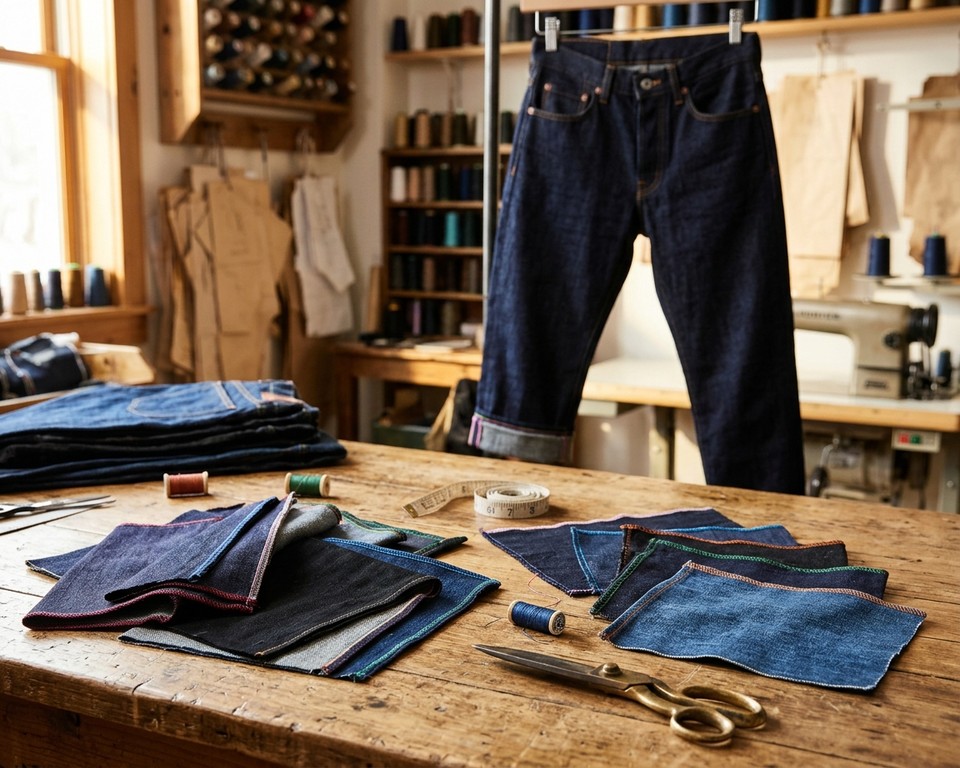
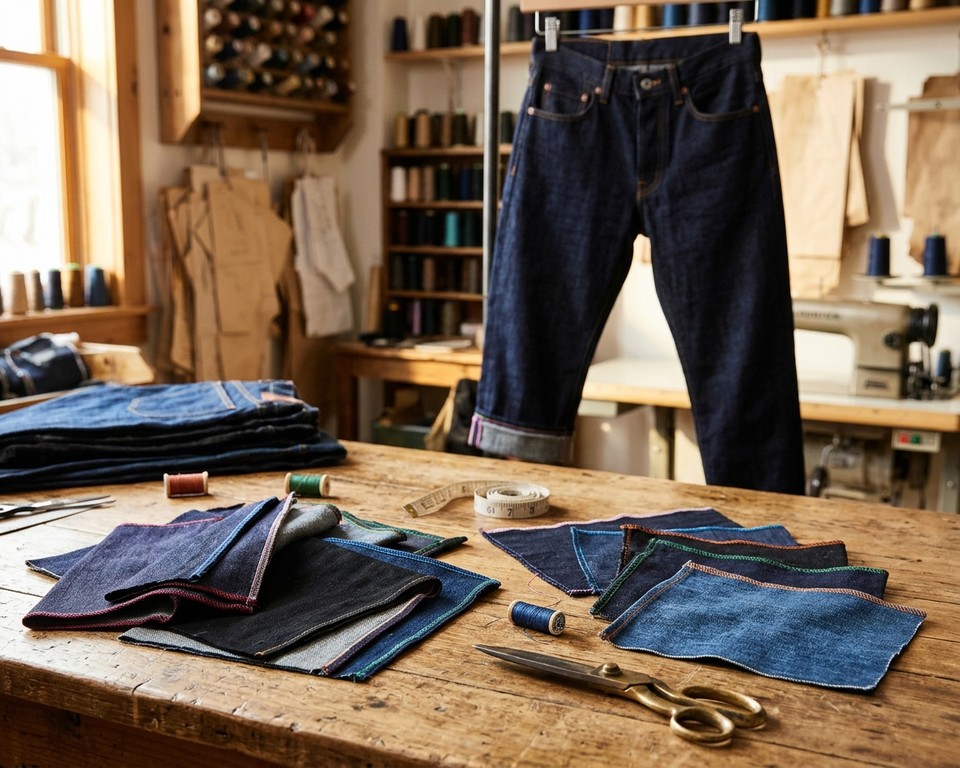
Small variations in denim edges can help establish a recognizable identity for a collection. WingFly Textile Co. offers red, blue, and pink selvedge colors and can modify edge designs according to customer requirements. Custom edge characteristics may help a selvedge denim product stand apart from competing fabrics and garments.

Choose Edge Colors And Designs

For jeans or additional denim clothing, communicate the desired selvedge color and edge pattern. Provide a clear sketch or reference image along with your request. WingFly can examine the proposed details and identify suitable products.

Determining Fabric Color, Texture, And Stretch Characteristics

To achieve the intended appearance and surface character, consider the available indigo, black, or slub options. The selection also covers 100% cotton and stretch-blend materials. For designs calling for a firm texture and relatively untreated appearance, raw denim or raw selvedge denim may be appropriate. Check the composition and performance specifications of each individual style.

Examining Fabric Swatches And Prototype Samples

The WingFly website allows customers to ask for complimentary fabric swatches using item numbers and their contact details. For a custom material request, specify the application, shade, weight, fiber content, edge details, and number of yards needed. Review the proposed design and physical sample garments or fabrics before giving final approval. This review helps the supplier and buyer evaluate the request and MOQ before a fabric order is confirmed.

Choose Denim Fabric For Jeans And Apparel

Choosing suitable denim depends on the desired garment fit, freedom of movement, and wearing characteristics. WingFly Textile identifies jeans, jackets, shirts, bags, bikinis, and additional products as possible applications for its materials.

Planning Fabric Selection For Different Clothing Types

Match the denim’s structure and weight to the requirements of the finished item. Sturdy twill constructions can work for jackets and daily-wear garments, while lower-weight materials may be preferable for shirts. WingFly describes its established selvedge edging process as helping jeans withstand abrasion caused by friction. Verify whether the edge construction and overall fabric structure meet your design objectives.

Define the cotton percentage, twill direction, slub effect, and stretch properties to achieve the desired appearance and fit. As an example, denim made from 100% cotton may feel more structured, whereas a stretch blend can offer additional flexibility. These choices provide direction when designing denim jeans and jackets.

Additional uses listed by the manufacturer include bikinis and various specialized apparel products. Ask about suitability for the proposed item and test a requested swatch through sample-garment production. Determine the final number of yards after evaluating how the material fits, feels, and performs when worn. This testing process helps limit surprises ahead of full production.

Review Wholesale Sourcing And Submit An Inquiry

Check purchasing minimums, available inventory, and expected schedules in writing before committing production funds. The supplier’s website identifies a customized-order MOQ of 1,000 yards or 300 pieces. Because marketplace offers show item-specific MOQs of 100, 1,000, and 1,500 yards, confirm the applicable minimum for the exact product you intend to purchase.

One marketplace listing gives a price of US$4.48 to 4.85 per yard for 13 oz cotton selvedge denim fabric, subject to a 1,500-yard MOQ. Consider the advertised amount a reference price and not a confirmed current quote. Before ordering, request confirmation of costs, material quality, shipping arrangements, and wholesale conditions.

The website shows inventory examples of 10,000 yards for 14 oz indigo W6615A and 4,200 yards for 23 oz indigo W98539. Confirm that these quantities remain available before proceeding. A supplier profile indicates an approximate lead time of one month off-season and one to three months at peak, with the exact schedule influenced by the order details.

For a detailed price request, send inquiry that specifies the product code, composition, weight, shade, edge pattern, number of yards, shipping destination, and target delivery date. You can use the company’s official website or reach WingFly Textile Co. Ltd. at No. 93 Xihuan Road, Buji Town, Longgang District, Shenzhen, Guangdong, China.

Final Considerations

Clear production planning helps clothing brands evaluate available materials and confirm supplier terms. With selvedge fabric choices ranging between 3 oz and 32 oz, WingFly gives production teams a starting point for selecting suitable weights for jeans and additional apparel.

At wingflytextile.com, buyers can request samples by submitting item codes and contact information. Include details of the fabric composition, weight, shade, edge pattern, planned product, order quantity in yards, and target delivery schedule. Supplying this information helps the textile co. evaluate material quality expectations and explore sampling or customized manufacturing options.

  • MOQ, inventory, lead times, and prices can differ between listings. Verify the current purchasing conditions before confirming an order.
  • Check whether the company’s denim clothing manufacturing and sampling services meet your business requirements.

For a productive discussion, provide WingFly with updated specifications and your intended schedule. A clear request allows both parties to determine whether the fabric and selvedge choices are appropriate for your denim project.

Frequently Asked Questions

What Do Buyers Need To Understand About WingFly Selvedge Denim Fabric?

Custom production options from WingFly include 100% cotton compositions, multiple fabric weights, and a selection of twill weaves. Confirm available material qualities and individual product specifications before ordering.

How Can I Select Suitable Fabric Weight And Cotton Composition?

Start with the planned garment’s fit, desired feel, and intended application. Lighter fabrics are appropriate for shirts, while heavier weights may suit jeans and jackets. Ask the manufacturer to confirm the exact weight and cotton composition before ordering.

What Is The Difference Between Raw, Sanforized, And Unsanforized Denim?

Raw denim receives little or no washing treatment and may develop fading as it is worn. Sanforized fabric is treated to limit shrinkage. Because unsanforized material may experience greater shrinkage after washing, discuss fit allowances and care requirements with your supplier.

Is It Possible To Customize Selvedge Edge Colors And Patterns?

Yes, customers can inquire about available edge colors and patterns and communicate their collection requirements. Personalized edge details may help establish a unique look for denim jeans and apparel collections.

Are Indigo, Black, Slub, And Stretch Options Available?

Custom manufacturing options may include these color, texture, and stretch variations. Explain your preferred color, surface effect, and elasticity requirements to help the supplier check available products and custom-development options.

Can I Request Swatches Or Custom Development?

Yes, obtaining material swatches allows you to examine the shade, feel, and weight prior to ordering. For customized development, provide your specifications and inquire about production schedules, sample charges, and the services included.

Which Types Of Garments Can Be Produced From These Fabrics?

Possible applications for the fabrics include jeans, jackets, shirts, and various accessories. Choose the material’s weight and finishing treatment according to the garment’s purpose, desired comfort, and maintenance requirements.

How Do Wholesale Orders, MOQ, And Pricing Work?

Ask the supplier about minimum order quantity (MOQ), cost per yard, available inventory, and expected production lead time. Send a detailed inquiry containing your required quantity and product specifications to compare wholesale offerings from manufacturers.

CARE INSTRUCTIONS FOR WINGFLY SELVEDGE DENIM FABRIC

WingFly Selvedge Denim Fabric For Customized Denim Manufacturing

WingFly Textile Co. Ltd. supplies brands seeking a manufacturing partner for custom production. Operating from Shenzhen, Guangdong, China, the company provides sample development, customized orders, and garment manufacturing. Product details and contact information are available at wingflytextile.com.

The company’s product development service allows buyers to select fabrics and determine design styling. This arrangement can help brands progress from an initial sample to completed garments while working with one supplier. Available choices include selvedge denim fabric, different cotton options, and both raw and finished styles. Verify the specifications and current availability of individual products before submitting an order.

Review technical details, selvedge features, planned apparel uses, and wholesale terms as you assess available options. Ask the supplier about quality standards, manufacturing volumes, expected delivery schedules, and the scope of its services. This information helps determine whether a particular fabric suits your clothing collection.

WingFly operates as a textile co. ltd. and manufacturer for brands comparing manufacturing suppliers in the United States and other markets. Contact the company directly to discuss manufacturing plans or obtain current details about its products. A detailed description of materials, design preferences, and order requirements can help begin productive discussions.


Explore WingFly Selvedge Denim Fabric Options

The way finished clothing performs depends partly on the material’s weight, fiber content, weaving construction, and finish. WingFly advertises customized weights between 3 oz and 32 oz, allowing buyers to consider fabrics for lightweight shirts and heavier applications. Let the garment’s planned application determine which fabric option you choose.

Choose Weight, Cotton Content, And Twill

The listed fabric selection includes 100% cotton, stretch, slub, black, and indigo varieties. Company descriptions additionally mention the use of Xinjiang cotton and natural indigo. Several twill-weave options allow buyers to adjust the fabric’s visual character and feel. Ask the supplier which specific item meets your requirements.

Compare Raw, Sanforized, And Unsanforized Options

Raw fabric retains its relatively untreated characteristics. Sanforized material undergoes processing to control shrinkage, whereas unsanforized fabric can shrink more after laundering. WingFly offers information about sizing and desizing processes, so buyers should confirm the finishing treatment applied to individual products.

“Choose weight for the garment, then confirm width, finish, and available quantity.”

A supplier profile states that the company operates 98 traditional shuttle looms and has monthly production capacity exceeding 400,000 yards. Prior to purchasing, confirm the item number, fabric width, weight, quantity available, and the applicable product-specific MOQ. These specifications help buyers assess alternatives and organize manufacturing plans.

WingFly Selvedge Denim FabricWingFly Selvedge Denim Fabric

Customizing Selvedge Features To Match Your Collection

Distinctive edge details may give a denim collection its own visual character. WingFly Textile Co. lists selvedge options in red, blue, and pink, with customized edge patterns available on request. These features can distinguish selvedge denim fabric within a competitive clothing market.

Choose Edge Colors And Designs

For jeans or additional denim clothing, communicate the desired selvedge color and edge pattern. Provide a clear sketch or reference image along with your request. WingFly can examine the proposed details and identify suitable products.

Set Color, Texture, And Stretch

Indigo, black, and slub choices allow buyers to influence the fabric’s visual style and texture. The selection also covers 100% cotton and stretch-blend materials. For designs calling for a firm texture and relatively untreated appearance, raw denim or raw selvedge denim may be appropriate. Confirm the material characteristics and expected performance for the selected fabric.

Review Swatches And Prototypes

Buyers may request free swatches through WingFly’s website by providing product codes and contact information. For a custom material request, specify the application, shade, weight, fiber content, edge details, and number of yards needed. Review the proposed design and physical sample garments or fabrics before giving final approval. This review helps the supplier and buyer evaluate the request and MOQ before a fabric order is confirmed.

Choose Denim Fabric For Jeans And Apparel

The appropriate fabric is determined by how the finished garment should fit, move with the wearer, and perform in use. WingFly Textile identifies jeans, jackets, shirts, bags, bikinis, and additional products as possible applications for its materials.

Plan Materials For Different Garments

Match the denim’s structure and weight to the requirements of the finished item. Sturdy twill constructions can work for jackets and daily-wear garments, while lower-weight materials may be preferable for shirts. WingFly describes its established selvedge edging process as helping jeans withstand abrasion caused by friction. Verify whether the edge construction and overall fabric structure meet your design objectives.

Specify fiber composition, twill orientation, slub texture, and elasticity when developing the garment’s look and fit. For example, 100% cotton can create a firmer hand feel, while stretch-blend fabric may permit greater movement. These choices provide direction when designing denim jeans and jackets.

WingFly also identifies bikinis and other specialized clothing among its potential fabric applications. Ask about suitability for the proposed item and test a requested swatch through sample-garment production. Only finalize the yardage requirement after checking fit, comfort, and wear characteristics. Taking this step can reduce unexpected problems before committing to a manufacturing order.

Evaluating Wholesale Supply Options And Sending An Inquiry

Check purchasing minimums, available inventory, and expected schedules in writing before committing production funds. The supplier’s website identifies a customized-order MOQ of 1,000 yards or 300 pieces. Because marketplace offers show item-specific MOQs of 100, 1,000, and 1,500 yards, confirm the applicable minimum for the exact product you intend to purchase.

One marketplace listing gives a price of US$4.48 to 4.85 per yard for 13 oz cotton selvedge denim fabric, subject to a 1,500-yard MOQ. Use this figure for comparison only rather than treating it as an updated supplier quotation. Ask for up-to-date information about pricing, fabric standards, freight, and wholesale purchasing terms before placing an order.

Current examples on the website list 10,000 yards of 14 oz indigo W6615A and 4,200 yards of 23 oz indigo W98539 as available stock. Check the current stock levels again before making purchasing decisions. A supplier profile indicates an approximate lead time of one month off-season and one to three months at peak, with the exact schedule influenced by the order details.

For a detailed price request, send inquiry including the item code, material type, fabric weight, color, selvedge design, required yardage, destination, and preferred delivery date. You can use the company’s official website or reach WingFly Textile Co. Ltd. at No. 93 Xihuan Road, Buji Town, Longgang District, Shenzhen, Guangdong, China.

Conclusion

A well-defined manufacturing plan allows brands to compare fabric alternatives and verify commercial conditions. With selvedge fabric choices ranging between 3 oz and 32 oz, WingFly gives production teams a starting point for selecting suitable weights for jeans and additional apparel.

At wingflytextile.com, buyers can request samples by submitting item codes and contact information. Provide the material, weight, color, selvedge design, intended garment, required yardage, and desired delivery date. These specifications allow the textile co. to assess quality requirements and discuss sample development or custom garment production.

  • MOQ, inventory, lead times, and prices can differ between listings. Verify the current purchasing conditions before confirming an order.
  • Check whether the company’s denim clothing manufacturing and sampling services meet your business requirements.

Send WingFly the latest material requirements and timing details to support a focused inquiry. A clear request allows both parties to determine whether the fabric and selvedge choices are appropriate for your denim project.

FAQ

What Should Buyers Know About WingFly Selvedge Denim Fabric?

WingFly supplies materials for custom manufacturing, including 100% cotton fabrics, different weights, and twill constructions. Before submitting an order, ask the supplier about the fabric grades available and the details of the selected product.

How Do I Choose The Right Weight And Cotton Content?

Begin by considering how the garment should fit, feel, and be used. Lightweight denim can work for shirts, whereas more substantial material may be better for jeans or jackets. Verify the fabric’s weight and cotton percentage with the supplier.

What Is The Difference Between Raw, Sanforized, And Unsanforized Denim?

Raw denim receives little or no washing treatment and may develop fading as it is worn. Sanforized fabric is treated to limit shrinkage. Because unsanforized material may experience greater shrinkage after washing, discuss fit allowances and care requirements with your supplier.

Is It Possible To Customize Selvedge Edge Colors And Patterns?

Yes, customers can inquire about available edge colors and patterns and communicate their collection requirements. Customized features can give jeans or other clothing a more distinctive appearance.

Are Indigo, Black, Slub, And Stretch Options Available?

Custom manufacturing options may include these color, texture, and stretch variations. Specify your intended shade, texture, and stretch characteristics so the team can identify appropriate fabrics and development possibilities.

Can I Request Swatches Or Custom Development?

Yes, obtaining material swatches allows you to examine the shade, feel, and weight prior to ordering. When requesting custom development, share detailed requirements and confirm expected timelines, sampling costs, and the scope of available services.

Which Types Of Garments Can Be Produced From These Fabrics?

These materials can be used to produce jeans, jackets, shirts, and accessories. Select a fabric weight and finish that match the intended garment’s function, comfort requirements, and care needs.

How Do Wholesale Orders, MOQ, And Pricing Work?

Confirm the minimum order quantity (MOQ), price for each yard, current stock levels, and manufacturing schedule with the supplier. Provide the desired order volume and material specifications when requesting quotations so you can evaluate manufacturers’ wholesale options.

Budget-Friendly Garage Organization

A well-planned garage organization system can turn a cluttered space into a functional area of the home. This guide will help you assess your space, select the right storage systems, and decide between DIY and professional installation. It covers various solutions, including wall systems, overhead racks, custom cabinets, and zone planning. In practical terms, this way, you can reclaim valuable space for parking, projects, and seasonal storage. For Better Garage Organization


By integrating walls, ceiling, floor, and fixed structures, you can achieve lasting garage storage and organization. The article also discusses budget-friendly options and the top garage storage systems for different budgets. It provides tips for finding local help when searching for garage storage near you. For Better Garage Organization

Key Takeaways

  • Garage organization systems are more effective when designed as an integrated whole, not as isolated pieces. Key Detail
  • Zone-based planning helps prioritize parking, workshop, and seasonal storage needs. Key Detail
  • Garage storage solutions range from inexpensive DIY racks to fully custom cabinetry for long-term value. Key Detail
  • Wall-mounted systems, overhead storage, and durable cabinets form the backbone of the best garage storage systems. Key Detail
  • Homeowners should compare products and local installers, and visit www.closetorganizersystems.com for examples and consultations. Important Point

In Practical Terms, Planning A Garage Organization System: Assessing Needs And Space

Creating a successful garage organization system begins with thorough planning. This process helps determine the best garage organization ideas and designs. It prevents unnecessary purchases and ensures solutions that meet both current and future needs. For Better Garage Organization

In Practical Terms, Inventory And Category Assessment

Begin by cataloging every item by category, quantity, weight, and how often it’s used. Common categories include hand tools, power tools, automotive fluids, seasonal gear, sports equipment, holiday decorations, and lawn-care supplies. Identify items that require locked storage, like chemicals, pesticides, and paint. For Long-Term Storage Efficiency

Keep simple counts and note how often you access each category. This helps in selecting the right storage organizer and deciding where items should go. Options include cabinets, open shelving, or lockable bins. For Long-Term Storage Efficiency

Garage Organization IdeasGarage Organization Ideas

In Practical Terms, Measuring And Mapping The Garage

Measure the length of walls, ceiling height, door clearances, and the locations of utility panels, water heaters, and furnaces. Create a scaled floor plan that includes vehicle footprints and clearance paths for doors and work areas. For Better Garage Organization

Before planning overhead racks or ceiling platforms, check joist spacing and structural elements. In practical terms, these details are critical for ensuring safe and practical storage solutions. For Better Garage Organization

Zone-based Strategy For Long-term Success

Separate the garage into five zones based on item frequency and weight. Zone 1 is for entry items like keys, bags, and shoes. Zone 2 is for vehicle parking. Zone 3 is for active storage, including cabinets, open shelving, and tool walls. In practical terms, zone 4 is for overhead storage of seasonal or rare items. In practical terms, zone 5 is for deep storage, like tall cabinets and enclosed closets. For Better Garage Organization

Assign storage types based on access frequency. In practical terms, light, infrequently used items are best for overhead racks. Heavy, frequently used items should be in reachable cabinets or on sturdy rails. In practical terms, this zoning strategy enhances safety and efficiency in garage spaces. For Better Garage Organization

Plan for future growth and avoid buying storage without a clear plan. Include options for floor finishes like epoxy or polyaspartic to discourage dumping and make maintenance simpler. Thoughtful planning leads to durable garage and storage solutions. For Long-Term Storage Efficiency

In Practical Terms, Garage Organization Systems

A unified garage layout views the garage as a unified space. It coordinates walls, ceiling, floor, cabinets, closets, and the workbench to store items efficiently. This approach transforms a disorganized space into a well-organized garage. For Long-Term Storage Efficiency

Professional designers start with a thorough assessment to avoid common pitfalls. In practical terms, they document stored items, use patterns, and consider vehicle needs, ceiling height, and utility locations. In practical terms, this information helps select the right garage storage system, whether it’s modular, custom cabinets, slatwall, rails, or overhead platforms. For Better Garage Organization

What Defines An Integrated System

An integrated system combines consistent aesthetics with load-capable anchoring. In practical terms, it organizes items by category and access frequency. Cabinets protect items, while slatwall and rails offer flexibility. In practical terms, overhead platforms maximize cubic feet. This integration prevents incompatible products and keeps the garage cohesive. For Long-Term Storage Efficiency

In Practical Terms, Assessment-driven Design Process

The process starts with inventory and usage mapping. In practical terms, designers document tools, seasonal gear, and hobby equipment, noting access frequency. In practical terms, they match storage types to needs, such as enclosed cabinets for chemicals and pegboards for hand tools. A zone map assigns locations for easy access. For Better Garage Organization

Benefits Over Piecemeal Solutions

Integrated systems reduce wasted space and awkward gaps. In practical terms, they increase longevity by using anchored components and durable materials. Overhead storage can add 150–600 square feet, boosting daily convenience and long-term value. For Better Garage Organization

In practical terms, issue with Piecemeal Approach Key Detail In practical terms, how an Integrated System Solves It Important Point In practical terms, result for the Owner Key Detail
Clashing attachment points and uneven load paths Important Point In practical terms, engineered anchoring that respects wall studs and joists Important Point In practical terms, safer, longer-lasting garage systems storage Key Detail
Wasted vertical or overhead space Key Detail Planned overhead platforms and shelving Key Detail More usable square footage and less clutter recurrence Important Point
In practical terms, choosing looks over strength Key Detail Material and hardware selection based on load and use Important Point Durable garage storage system that performs Important Point
Design that fits only current possessions Important Point In practical terms, modular zones and adaptable slatwall or rail solutions Key Detail Future-proof garage organization solutions Key Detail
Hiring a single product installer without a plan Important Point In practical terms, comprehensive garage organization service with assessment Key Detail Smoother installation and higher return from the best garage organization system Key Detail

Custom Garage Cabinets And Their Advantages

Choosing the right cabinets is key to both function and aesthetics. In practical terms, a well-thought-out custom garage organization plan can transform unused corners into valuable storage. In practical terms, homeowners seeking daily convenience or long-term solutions often find custom options superior to off-the-shelf choices. For Better Garage Organization

Differences between stock, semi-custom, and fully custom cabinets For Long-Term Storage Efficiency

Ready-made cabinets, available in fixed sizes from big-box stores, suffice for basic needs but may leave space unused. In practical terms, semi-custom cabinets offer more size and finish options, striking a balance between cost and fit for many two-car garages. They cater to the majority of homeowners’ needs. For Long-Term Storage Efficiency

Fully custom cabinets, tailored to exact dimensions, solve unique layout challenges. They fit around electrical panels and include specialized drawers or lockable sections. This level of customization maximizes space and supports integrated workbench setups. For Long-Term Storage Efficiency

Materials and hardware that matter For Better Garage Organization

Steel cabinets are ideal for heavy tools and workshop environments due to their high load capacity and moisture resistance. In practical terms, thermally fused laminate on engineered wood provides a clean look and better humidity resistance than raw wood. For Long-Term Storage Efficiency

Finishes like polyurea or powder-coating on metal offer superior scratch and chemical resistance compared to standard paint. Prioritize hinge quality, weight ratings, and adjustable shelving over appearance. Solid wood is suitable only for climate-controlled garages. For Long-Term Storage Efficiency

When to invest in custom cabinetry For Long-Term Storage Efficiency

Custom cabinetry is wise for garages with odd dimensions, built-in utilities, or those seeking long-term durability and resale value. It offers integrated lockable storage for chemicals and secure bays for expensive equipment. For Better Garage Organization

Pricing varies based on scope. In practical terms, semi-custom wall-mounted systems cost between $1,500 to $5,000 installed. Fully custom solutions can range from $5,000 to $15,000 or more, depending on materials and complexity. In practical terms, this helps homeowners balance immediate costs against long-term benefits and cohesion. For Better Garage Organization

In practical terms, cabinet Type Key Detail Typical Cost Range (Installed) Important Point In practical terms, best Use Important Point Durability Key Detail
In practical terms, stock Cabinets Important Point In practical terms, $300–$1,200 per run Important Point In practical terms, basic garage cabinet organization for budget projects Important Point Moderate Key Detail
Semi-Custom Cabinets Important Point $1,500–$5,000 Important Point In practical terms, balanced fit and finish for most homes Key Detail High Key Detail
In practical terms, fully Custom Cabinets Key Detail $5,000–$15,000+ Key Detail Maximizing space, unique layouts, integrated systems Key Detail Very High Important Point
In practical terms, steel Modular Systems Key Detail In practical terms, $1,000–$8,000 Key Detail In practical terms, workshops and heavy-duty storage cabinets for garage Key Detail In practical terms, excellent Key Detail

Proper planning ensures cabinets for garage storage meet daily needs. Whether aiming for streamlined cabinets or a full-room renovation, material choice and configuration are key to long-term satisfaction. For Better Garage Organization

In Practical Terms, Overhead Garage Storage Solutions And Installation Considerations

Ceiling-mounted storage frees up floor space while keeping seasonal items within reach. A well-thought-out garage organization strategy balances capacity, vehicle clearance, and safe access. Below is a concise guide to common systems, optimizing their use, and pre-installation checks. For Better Garage Organization

In Practical Terms, Types Of Overhead Systems

Suspended ceiling platforms offer solid surfaces suspended from joists. These platforms can hold 600–1,500 lbs, perfect for large bins and seasonal equipment. For Long-Term Storage Efficiency

Open steel overhead racks are ideal for long items like lumber, conduit, and ladders. They keep irregular shapes above cars without using closed space. For Better Garage Organization

Pulley and lift systems lift bikes, kayaks, and canoes. In practical terms, they come in manual or motorized models, speeding up retrieval and reducing strain. For Long-Term Storage Efficiency

Track-based ceiling systems use track-based hardware and hooks for flexible hanging. In practical terms, these systems adapt to changing needs and tools without major rework. For Better Garage Organization

In Practical Terms, Capacity And Space Optimization

A 4×8-foot ceiling platform rated near 500 lbs can hold 15–20 large storage bins stacked two-high. This removes significant floor clutter, clearing room for a workspace or parking. For Long-Term Storage Efficiency

Available ceiling clearance determines the best systems. In practical terms, eight-foot ceilings support modest storage with tight clearance. Nine- to ten-foot ceilings allow larger platforms and easier vehicle clearance. For Long-Term Storage Efficiency

Include overhead storage during initial design to align with wall systems and driveway vehicle height. This prevents conflicts with garage doors and lighting. For Better Garage Organization

Structural And Safety Requirements

Anchors must attach to ceiling joists, not drywall. System load ratings reflect distributed capacity across multiple anchors. In practical terms, a single lag bolt rating is not equal to system capacity. For Better Garage Organization

Proper joist location, lag bolt size, and fastener pattern affect performance. For heavy loads, a professional structural assessment is recommended to confirm safe installation of overhead garage storage systems. For Long-Term Storage Efficiency

Access and ergonomics matter. Use ladders, step platforms, or hoists to avoid lifting heavy items above head height. Avoid storing very heavy or frequently used objects overhead. For Better Garage Organization

In practical terms, system Type Key Detail Typical Capacity Key Detail Best Use Important Point Installation Note Key Detail
Ceiling-mounted platform Key Detail In practical terms, 600–1,500 lbs Important Point Large bins, seasonal gear Key Detail Anchor to multiple joists; consider pro install Key Detail
Open metal racks Important Point In practical terms, 200–800 lbs Important Point Lumber, pipes, ladders Important Point Position over unused areas; check vehicle clearance Key Detail
In practical terms, pulley/hoist systems Key Detail 50–250 lbs Important Point In practical terms, bikes, kayaks, canoes Important Point Choose motorized for frequent use; secure anchors Key Detail
In practical terms, slotted track systems Key Detail In practical terms, varies by configuration Important Point In practical terms, hooks, hanging tools, flexible layouts Key Detail In practical terms, easy to reconfigure; tie into wall zones for balance Key Detail

Typical installed costs for overhead platforms range from $300–$800. In practical terms, compare quotes for overhead garage storage racks installation and confirm garage door clearance. Local building codes can affect allowable loads and anchor methods, so check requirements before purchase. For Better Garage Organization

Garage Wall Organization: Slatwall, Rails, And Shelving

A carefully designed garage wall system balances flexibility, strength, and access. In practical terms, it offers a range of options, from adaptable slatwall panels to heavy-duty steel rails and fixed shelving. By combining these, you can create a garage wall that accommodates tools, sports gear, and bulky equipment efficiently. For Better Garage Organization

Slatwall and modular panel systems provide a universal mounting surface, making it easy to reconfigure. Hooks, baskets, and small shelves can be easily installed, allowing the layout to evolve as needs change. In practical terms, slatwall is ideal for light to medium items like hand tools and sporting gear, making it a popular choice for garage wall organization. For Long-Term Storage Efficiency

Steel rail and French cleat systems, on the other hand, offer the strength needed for heavy loads. These rails support bikes, shop tools, and storage cabinets while allowing for repositioning. In practical terms, professional-grade French cleats are perfect for toolboards and shelving when you need to store high-capacity items. For Better Garage Organization

Permanent shelving and cabinet combinations provide dependable support for predictable, heavy storage. In practical terms, solid shelving with robust brackets can hold paint cans, automotive fluids, and bulk supplies. In practical terms, closed garage wall storage cabinets protect items from dust and keep the space visually tidy. For Better Garage Organization

Practical selection follows three rules: use closed cabinets for security and neatness, open shelving for frequent access, and rail or cleat systems for heavy, reconfigurable storage. In practical terms, integrating slatwall in zones with changing needs gives homeowners a flexible garage wall storage solution that adapts over time. For Better Garage Organization

Experienced installers like Gladiator and Rubbermaid can supply components, while contractors often mix brands to match load and budget. Planning a layered approach to garage wall storage prevents clutter and improves day-to-day use of the space. For Better Garage Organization

In Practical Terms, Garage Tool Organization Strategies

Creating a lasting garage tool organization plan starts with a clear strategy. In practical terms, begin by categorizing tools by their use and size. In practical terms, place frequently used hand tools near your workbench. Store bulkier items in deeper zones. In practical terms, this method streamlines your garage, saving time searching for tools. For Long-Term Storage Efficiency

Effective hand tool storage combines visibility and order. Pegboard, slatwall, or steel panels are ideal for hanging wrenches, pliers, and screwdrivers. In practical terms, silhouette shadow boards enhance retrieval speed and accountability. In practical terms, small items fit perfectly in drawer organizers and labeled compartments within garage cabinets. For Better Garage Organization

Power tool protection and charging stations are essential in a complete garage tool storage system. In practical terms, store power tools in enclosed cabinets to protect them from dust and moisture. In practical terms, install shelves with built-in charging outlets for batteries and chargers. Always store batteries away from concrete to prevent moisture damage and slow down degradation. For Better Garage Organization

Utilizing long-handled and awkward tool storage saves floor space and prevents clutter. In practical terms, wall-mounted clamp holders, slot systems, or specialized racks are perfect for rakes, shovels, and brooms. For seasonal items, overhead horizontal racks rated for length and weight are ideal. In practical terms, ensure clamps and holders fit the tools’ shape and load to avoid failures. For Long-Term Storage Efficiency

Design your workbench, cabinets, and tool storage as a unified zone to enhance workflow. Opt for bench height that’s comfortable, choose drawer layouts for common hand tools, and position overhead access for frequently used power tools. In practical terms, a well-thought-out layout boosts garage storage organizers and daily productivity. For Long-Term Storage Efficiency

Safety and routine maintenance are key for a reliable garage tool storage setup. In practical terms, store fuel and oil in approved containers and lock them in ventilated cabinets when possible. Use secure garage tool storage systems to reduce theft risk and extend tool life through proper protection and organized placement. For Long-Term Storage Efficiency

In Practical Terms, Garage Storage Closets And Deep Storage Zones

A well-planned garage storage closet offers concealment, protection from dust and pests, and secure locking for hazardous materials and seasonal gear. This setup keeps the active work and vehicle areas clutter-free. It also safeguards paints, fertilizers, and valuables that require stable conditions. For Long-Term Storage Efficiency

In Practical Terms, Purpose And Benefits Of Enclosed Closets

Enclosed closets act as a secure vault within the garage. In practical terms, they shield items from moisture and sunlight, and restrict access to chemicals and tools that should remain locked away. For Better Garage Organization

These closets are ideal for items used infrequently. Storing seldom-accessed boxes and seasonal equipment in a garage storage closet maintains daily zones’ tidiness. It also enhances workflow. For Better Garage Organization

In Practical Terms, Designing A Garage Storage Closet Within A System

Design the closet as a central element in the overall zone plan. In practical terms, position deep storage near the far wall or in Zone 5, next to tall cabinets. In practical terms, this preserves space near the door and vehicle. For Better Garage Organization

Opt for materials resistant to moisture, such as TFL cabinetry or steel-clad units. Include adjustable shelves, lockable doors, and interior organizers for bins and labeled hazardous-item containment. For Long-Term Storage Efficiency

Combine the closet with open cabinets and slatwall. Use the closet for deep and hazardous storage. In practical terms, cabinets and rails handle daily tools and gear, creating a balanced garage storage closet design. For Long-Term Storage Efficiency

Safety And Code Considerations

Store flammables and chemicals in approved containers and keep them locked. In practical terms, adhere to local fire and building codes for ventilation and container limits when designing a garage closet storage plan. For Long-Term Storage Efficiency

Ensure required clearances around water heaters and furnaces for service access and egress. A qualified garage storage company can advise on electrical and mechanical codes during installation. For Better Garage Organization

Custom options vary in price. Typical custom garage storage closets range from $1,500 to $6,000, depending on size, materials, and features. Select garage closet storage solutions that meet safety needs and budget. For Better Garage Organization

Affordable And Small Garage Organization Ideas

Compact garages can quickly become cluttered. A smart strategy focuses on using vertical space, durable materials, and budget-friendly upgrades. This practical guide offers cost-effective garage organization solutions for tight budgets and spaces. For Long-Term Storage Efficiency

DIY-friendly options can stretch a small budget. In practical terms, installing a pegboard or basic slatwall panels is a cost-effective way to organize tools and gardening gear. Wire shelving and labeled plastic bins help keep items visible and stackable. In practical terms, you can also upcycle wooden pallets into shelving or build simple French cleat boards for flexible hanging storage. For Better Garage Organization

Even with limited funds, locking and concealment are important. In practical terms, use lockable plastic cabinets or bolt simple metal cabinets from big-box stores to a wall. Cheap garage storage cabinets provide secure spots for chemicals and power tools without a high price tag. For Better Garage Organization

Inexpensive And Diy-friendly Options

Standalone cabinets from retailers like Home Depot or Lowe’s are less expensive than custom units and serve as a good starting point. In practical terms, simple overhead pulley hoists can lift bikes out of the way. Adding basic storage racks for garage use keeps seasonal gear off the floor. These steps help preserve floor space and improve access. For Better Garage Organization

In Practical Terms, Maximizing Storage In Small Garages

Stack tall units and fit slim-profile cabinets along unused walls. Wall rails and slatwall maximize vertical space. In practical terms, place daily items near the entry, and store rarely used items on storage racks for garage ceilings or in a deep storage closet. In practical terms, combination bench/cabinet units double as work surfaces and compact storage. For Better Garage Organization

Choosing Modular Systems For Future Flexibility

Modular systems adapt as needs evolve. In practical terms, opt for modular cabinets and slatwall components that expand with add-on shelves, hooks, and bins. Expandable modular systems often outperform the cheapest alternatives over time, reducing replacement frequency and increasing long-term value. For Long-Term Storage Efficiency

In practical terms, option Important Point In practical terms, typical Cost Range Important Point Best Use Important Point
In practical terms, wire shelving (adjustable) Important Point In practical terms, $50–$200 Important Point Light storage, easy reconfiguration Important Point
Stock freestanding cabinets Important Point In practical terms, $200–$800 per unit Important Point General storage, lockable options available Key Detail
In practical terms, overhead platforms / racks Key Detail $300–$800 installed Important Point Seasonal items, bike storage Important Point
Slatwall panels and rails Key Detail $75–$350 Key Detail In practical terms, tool organization, vertical systems Important Point
French cleat boards (DIY) Key Detail $20–$120 Important Point Custom hanging storage, modular layout Key Detail

When balancing cost and performance, choose cheap garage organization only if durability is a priority. Prioritize garage organization shelves and reliable storage racks for garage that resist sagging. Thoughtful choices make small garage organization practical, affordable, and adaptable to the homeowner’s evolving needs. For Long-Term Storage Efficiency

Choosing A Garage Organization Company And Installation Services

Choosing the right team is key to a clean garage. In practical terms, a top garage organization company will have a clear design process, use durable materials, and offer solid guarantees. In practical terms, homeowners should expect a site assessment, custom layout plans, and load ratings for overhead racks before installation starts. For Better Garage Organization

Experience with integrated systems is important. In practical terms, look for a company with completed project examples, references, and work with high-quality materials. Ensure they anchor overhead systems to joists and follow local building codes. For Long-Term Storage Efficiency

The contractor discussion should be direct and specific. Ask for references and photos of similar installs. Request material specifications and written load ratings for racks and rail mounts. In practical terms, find out what warranty covers cabinets and installation, and whether permits and inspections are handled by the contractor. For Better Garage Organization

Define the project scope and timing. Ask how the company coordinates floor coatings, door clearances, and utility locations. In practical terms, confirm the payment schedule and exact deliverables in a written estimate. A thorough garage organization company will provide a scope-of-work document before work begins. For Long-Term Storage Efficiency

Use targeted local searches with targeted queries like garage organization company near me and garage storage company near me to find nearby teams. In practical terms, check local reviews, Better Business Bureau ratings, and manufacturer-authorized dealer status. In practical terms, look for providers listed for garage organization systems near me and garage organization services to compare offerings. For Better Garage Organization

Project costs vary by system complexity. Semi-custom installs often run $1,500–$5,000. In practical terms, full integrated systems frequently fall between $8,000 and $25,000 or more. In practical terms, request written estimates that break down materials, labor, and any follow-up service from garage storage installers. For Long-Term Storage Efficiency

Choose a provider that offers end-to-end support. In practical terms, companies that combine design, materials selection, professional installation, and post-installation service simplify the process. In practical terms, confirm that the garage organization company will issue warranties, provide load ratings, and schedule any required follow-up visits. For Better Garage Organization

In Practical Terms, Costs, Roi, And Trends In Garage Storage Design

Establishing a realistic budget is key when understanding garage storage costs. Stock freestanding cabinets cost $200–$800 each. In practical terms, semi-custom wall-mounted systems range from $1,500–$5,000 installed. In practical terms, fully custom full-garage cabinetry can be $5,000–$15,000 or more. Overhead platforms are $300–$800 installed. For Long-Term Storage Efficiency

A garage storage closet built as a custom built-in costs $1,500 to $6,000. A complete garage storage system, including design and install, can be $8,000–$25,000+ depending on materials and region. For Long-Term Storage Efficiency

Return on investment comes from tangible and daily-use gains. Well-planned systems reduce loss and damage to tools. They also speed up routine tasks and can enhance resale value. Choosing higher-quality materials like steel or TFL with robust hardware lowers long-term maintenance and replacement costs. For Better Garage Organization

An effective garage storage solution balances upfront cost with durability, adaptability, and long-term usability. For Better Garage Organization

Current trends reshape what buyers expect from garage storage companies and designers. Garages now serve as home gyms, climate-controlled workshops, and hobby rooms. This drives demand for integrated workbench-and-cabinet systems and residential finishes with soft-close hardware. For Long-Term Storage Efficiency

Modular and expandable custom garage storage systems remain popular. They adapt with changing household needs. In practical terms, homeowners seeking the best garage storage solutions often prioritize systems that blend storage and workspace while matching interior aesthetics. For Better Garage Organization

The final recommendation emphasizes planning from a systems perspective. In practical terms, prioritize material and hardware quality, design for future growth, and consider professional installation from reputable providers. In practical terms, when comparing offers, evaluate total lifecycle value. This helps find the best garage storage system for long-term performance. For Long-Term Storage Efficiency

Related: Garage Door Cost and Installation in San Clemente: Budget Tips

The Appeal of a Sea Glass Colored Dress for Destination Weddings

Boho‑Chic Luxe: Discover Natalie Martin’s Signature Styles

Forecasts show the sustainable clothing industry climbing to $8.25 B by 2023. That uptick highlights rising interest in green style. Natalie Martin Clothing leads this trend with its luxury boho style. It’s celebrated for crafting chic, eco‑conscious garments.

Ranging from maxis to hand‑batiked kimonos, Natalie Martin Fiore dress merges fashion with responsibility. It caters to those who value both fashion and the environment. This makes it a top choice for the modern, conscious consumer.

Essential Summaries

  • Natalie Martin Clothing epitomizes luxury boho fashion.
  • They champion green processes throughout their collections.
  • Signature offerings span flowing dresses, kimonos, and beyond.
  • The eco‑fashion market continues expanding, forecast at $8.25 B by 2023.
  • Natalie Martin’s commitment to quality ensures a timeless wardrobe.

Natalie Martin Fiore dress

Meet Natalie Martin Clothing

Natalie Martin Clothing brings a fresh perspective to luxury boho style, thanks to Australian designer Natalie Martin. The line marries free‑spirited shapes with expert handiwork. Each piece is a testament to quality, adorned with hand batik prints that infuse authenticity into the collection.

Ideal for anyone seeking easy sophistication—from weekend brunch to evening galas. But it’s more than looks: sustainability reigns at the heart of the label. From fabric sourcing to fair‑trade production, it shows. They combine trend and thoughtfulness in each creation.

Dive into her lineup to find the perfect balance of aesthetics and ethics.

What Makes Natalie Martin Stand Out

Natalie Martin fashion is a perfect mix of relaxed glamour and detailed designs. It offers a modern take on bohemian style, appealing to those who value comfort and elegance. Each piece is made with light fabrics and eye-catching prints, bringing a fresh perspective to women’s fashion.

From draped maxis to statement separates, it champions self‑expression. Layer them up for dynamic ensembles wherever you go. Whether it’s a casual day or a special occasion, Natalie Martin’s fashion adds a touch of luxury to your wardrobe.

Cut to complement all shapes, these garments transform basics into head‑turners. Merging practicality with polish, they invite sartorial self‑expression.

Meet the Fiore Dress

The Natalie Martin fiore dress is a standout in her collection. With its graceful drape and vibrant patterns, it defines the label. Crafted in airy textiles, it pairs ease with elegance on sunny afternoons.

It effortlessly transitions from daylight chic to evening glam. Whether you’re heading out for a night or a casual day, it adapts seamlessly. Its thoughtful cut and comfort make it a wardrobe essential.

Offered in an array of hues and fits, it suits all preferences. Comfort meets couture in this must‑have dress. Its curated shape and design draw chic devotees.

Discover the Sea Glass Green Style

Praised for its soothing hue and flattering cut, the Sea Glass Green dress shines. It embodies the beauty of nature with its soft green shades, ideal for those who love nature-inspired fashion. The fabric is breathable, ensuring comfort for any event, from casual to formal.

Timeless yet contemporary, it anchors any chic closet. Be it gala or getaway, it commands gaze and praise. Beloved by brand devotees for its mix of chic and ease.

Eco‑Chic by Natalie Martin

Her brand’s backbone is eco‑responsible practice. As a pioneer in eco-friendly fashion, this line uses sustainable materials to craft styles that are not only beautiful but also responsible. Every garment speaks to fair‑trade methods, so your wardrobe treads lightly.

Choosing Natalie Martin clothing means valuing quality over quantity. Her mantra: own less, love more, and prolong garment life. That eco focus cements her following among conscientious buyers.

Trendy Dresses for Every Occasion

Natalie Martin clothing presents a wide range of trendy dresses for all occasions. Whether it’s a casual brunch or a formal evening event, their collection has something for everyone. All cuts highlight individuality while prioritizing comfort.

Choose from statement motifs or muted tones to suit your vibe. Here are some standout options:

  • Maxi dresses: Ideal for sun‑soaked days or seaside escapes.
  • Midis: Ideal for transitioning from day to night with ease.
  • Mini dresses: Great for making a statement at parties or social events.

Among contemporary women’s labels, hers shines bright. Her designs balance the now with the never‑going‑out‑of‑style. Choosing a Natalie Martin dress means embracing versatility and quality. It ensures you make a lasting impression wherever you go.

Where to Find Natalie Martin Clothing

You can snag her pieces via diverse retail outlets. Visit web‑based boutiques like Shopbop for effortless discovery. Their roster includes her standout creations. This ensures you’ll discover pieces that resonate with your personal style.

For those who enjoy in-person shopping, several exclusive retailers carry Natalie’s collection. This allows you to see and touch the garments before buying. You’ll witness the meticulous workmanship in person.

Her website offers a direct portal to every release. It showcases the latest collections and any ongoing sales. This direct source is perfect for those looking to purchase Natalie Martin’s designs. Use these options to secure your next standout ensemble.

Boho Chic Ideas

Bohemian aesthetics empower personal flair through relaxed cuts and earthy textiles. Her assortment thrives on inviting imaginative outfit crafting. Channel boho by stacking textures, adding statement accessories, and mixing motifs. Such touches not only improve ensembles but also broadcast your flair.

Let her designs guide you toward relaxed, expressive outfits. It features wardrobe staples, from draped gowns to intricate tops. They serve as versatile canvases for your individual style palette.

Bohemian style’s true beauty lies in its flexibility. It empowers imaginative layering, so no two looks need ever repeat. Her designs ensure your dressing options remain boundlessly creative.

Celebs in Natalie Martin

Fashion icons have increasingly embraced Natalie Martin clothing, showing its charm and versatility in celebrity style. Names such as Vanessa Hudgens and Gigi Hadid showcase her creations. They blend bohemian aesthetics with contemporary flair, making the brand a staple on red carpets and in everyday looks.

These figures leverage her relaxed luxe to project personal style. Complemented by high‑end totes and standout pieces, her ensembles dazzle. Such styling cements her as an influencer darling.

Celeb endorsements amplify her global profile. By showing various ways to style Natalie Martin pieces, they inspire others to incorporate similar elements into their wardrobes. You, too, can channel red‑carpet glamour with her bohemian luxe.

Celebrity Style Example Event
Vanessa Hudgens Draped evening gown Red Carpet Gala
Gigi Hadid Chic off-shoulder gown Designer Showcase
Sienna Miller Artisanal print dress Award Show

Natalie Martin’s Design Journey

Her creative progression charts a fascinating path through evolving boho aesthetics. Her collections began with a bohemian aesthetic, gradually expanding to include a wide range of silhouettes and styles. It reveals her talent for marrying heritage techniques with current trends.

Natalie continually challenges her collections, introducing new concepts while staying true to her unique style. Her designs balance elegance with comfort, catering to today’s fashion-conscious consumers. Her newest releases fuse artisanal techniques with trend‑driven details.

Her progression responds directly to shifts in consumer values. Her pivot to green methods echoes worldwide eco‑awareness. Every drop invites both style admiration and earth‑friendly action.

Buyer Testimonials

Customer feedback is key in shaping the shopping experience at Natalie Martin Clothing. Reviews frequently laud the brand’s standout qualities. Frequent comments highlight the luxurious feel and precise finishing.

Comfort and chic design earn top marks. They gush over the sumptuous textiles that instantly refine any outfit. Such praise reassures future buyers of their purchase.

Learning from peers’ experiences streamlines decision‑making. They share insights on fit and versatility, guiding others considering a purchase. These insights solidify Natalie Martin’s standing as a top name in luxury boho fashion.

Aspect Positive Feedback Common Comments
Material Superior textiles “Soft and durable, feels luxurious”
Styling Artful patterns “Standout without shouting”
Ease Day‑long comfort “Feels like a second skin”
Adaptability Dress up or down “Works from desk to dinner”

Final Thoughts

Natalie Martin clothing is a top choice for those looking for luxury boho fashion essentials. She redefines chic with a green conscience. The brand focuses on eco-friendly practices while creating stunning, versatile pieces for any occasion.

Planning a closet update? Explore her signature approach. Each piece showcases high-quality craftsmanship and aligns with your values through its eco-conscious approach. It empowers you to stand out responsibly.

Choose her lines to blend glamor with green ideals. Dive into her offerings and elevate your everyday wardrobe with boho luxe.